
At Sofeast, we often see shipping problems that could have been avoided with relatively simple shipping damage prevention measures. One of the most common issues is companies choosing packaging or shipping methods that introduce unnecessary risk.
International shipping can be rough on products. Containers move across oceans, trucks brake suddenly, cargo gets handled repeatedly in ports and warehouses, and temperature changes can create moisture inside containers.
When shipments are not prepared properly, the result is often damaged products, repacking costs, delays, and disputes between suppliers and importers. Let’s explore the problems and our suggestions for mitigating them.
Why shipping preparation matters more than many companies expect
Many importers try to reduce costs by simplifying packaging or loading methods. That might mean skipping palletization, reducing protective packaging, or avoiding packaging reliability tests.
On paper, these changes can save money. In practice, they often increase the total cost of the shipment.
Damaged cartons, cosmetic packaging damage, lost units, or moisture exposure can lead to product failures, retail rejections, and costly rework after arrival.
In other words, the cost savings disappear quickly once problems start appearing.
The hidden dangers of shipping loose cartons
One of the highest risk practices is shipping loose cartons inside shipping containers or air cargo.
Loose cartons are not secured to pallets or slip sheets and are not unitized with wrapping or straps.
During transport, these cartons are exposed to several problems:
- Stacking pressure becomes uneven. Heavier cartons may end up on top of weaker ones, leading to crushing or deformation.
- Loads can shift when vessels roll at sea or when trucks brake. Without a unitized load, cartons slide, and columns collapse.
- Loose cartons require more manual handling during loading, unloading, and warehouse transfers. Every additional touch increases the chance of drops or impact damage.
These issues frequently lead to crushed packaging, internal product damage, and higher defect rates (especially in products towards the bottom of the shipment).
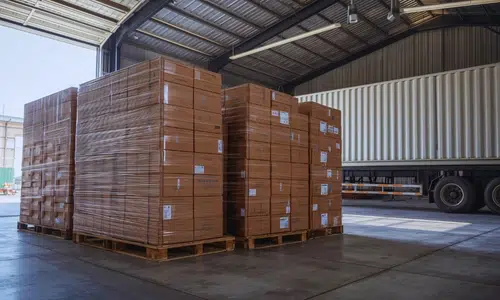
Correctly-packaged and palletized cartons should look like this:
Moisture and environmental risks inside containers
Containers also create challenging environmental conditions.
Temperature swings can cause condensation inside the sealed container, sometimes called container sweating. When cartons sit directly on the steel floor or against container walls, they can absorb such moisture.
This can result in warped cartons, mold or mildew, rust on metal components, damaged labels or barcodes, and even ruined products (especially electronics and PCBAs).
There are a few ways to mitigate the risk of moisture:
- Pallets keep cartons elevated and allow airflow around the load.
- Airtight packaging, sealed with plastic, is a barrier that prevents moisture from crossing (film and sealed bags are suitable for this).
- Dessicants placed inside the container and also inside product packaging help to soak up any moisture trapped inside (a large 40ft container could have up to 20-30 dessicant bags added). However, once they have absorbed a lot of moisture, they sometimes inject it back into the (drier) air.
Retail packaging damage is another common issue
Even when products survive transport structurally, retail packaging may still arrive damaged if inadequately protected. If not at least wrapped in shrink film, these types of damage are common:
- Surface Scuffing & Abrasion: Causes printing to be scuffed away, making the packaging look tired and worn.
- Color Transfer & Print Damage: Friction and humidity can cause ink offset from adjacent cartons or inserts, resulting in streaks and mottling. (Spot UV and soft-touch coatings are especially vulnerable.)
- Contamination (Dust, Fibers, Adhesives): Unwrapped cartons pick up dust, lint, tape residue, and pallet fibers during pick/pack and cross-docking, so they look dirty and worn.
- Label/Sticker Damage or Detachment: Stickers adhere better to film than to many cartons. Labels lift, tear the print, or leave residue if placed on cartons alone.
- Moisture & Humidity Marks: Condensation from temperature swings can spot on matte coatings or cause slight warping of unprotected paperboard.
- Tamper Evidence Gaps: Without shrink film, boxes can be opened and reclosed undetected.
- Friction-Induced Carton Movement in Master Packs: Film stops gift boxes from sliding inside master cartons, increasing internal collisions during transit.
For products sold in retail environments, this cosmetic damage can lead to retailer rejections or repackaging work. Customers certainly won’t welcome damaged packaging.
Simple shipping damage prevention steps that greatly reduce risks
Fortunately, many shipping problems can be avoided with relatively simple measures:
- Carton compression testing according to standards such as ISTA helps confirm that packaging can withstand stacking loads during transport.
- Palletizing shipments and securing them with stretch wrap and corner protection helps keep loads stable during handling and transit.
- Protective shrink film and other types of protective packaging on retail boxes reduce cosmetic damage and contamination.
- Conducting a Container Packing & Loading Supervision (PLS) inspection to spot issues as a shipment is loaded, which really is the last line of defence against inadequately packaged and protected products and cartons leaving the factory.
These precautions are not complicated, but they significantly reduce the likelihood of costly shipping issues.
We always say to our customers that shipping preparation should be treated as part of product quality management, not just logistics. It follows that preventing damage before products leave the factory is usually far less expensive than dealing with the consequences after they arrive at the destination, often many thousands of miles away across the oceans.




Leave a Reply