



Suppose you’re planning to manufacture a product in Asia and sell it in the European Union (EU). In that case, it’s crucial to understand CE compliance for manufacturing in Asia and the role of CE marking, even if you’ve never dealt with it before. CE marking is a legal requirement for many types of products; it shows your product meets EU safety, health, and environmental protection standards.
What Is CE Marking?
CE stands for Conformité Européenne, meaning “European Conformity.” If your product falls under one or more CE directives or regulations, it must bear the CE marking before it can be legally sold in the EU. This applies to a wide range of product categories, and in this article, we focus on non-medical electrical and electronic products.
Here’s the CE marking on a microphone, for example:
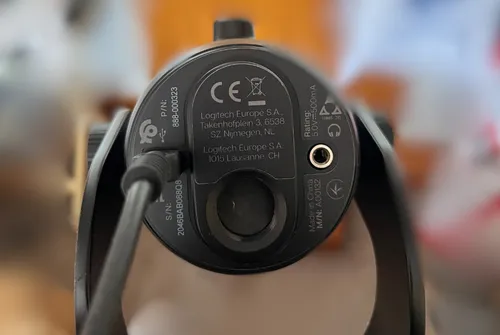
There are specific CE marking requirements about the size and format of the symbol, how it should be applied (e.g., on the product itself or its packaging), and how visible it must be. You can read the official guidelines directly from the EU source: CE Marking Guidance – European Commission
But it’s MUCH wider than a couple of letters. CE is an entire compliance scheme!
Which CE Regulations Apply?
There isn’t just one regulation (note: technically there are both ‘directives’ and ‘regulations’, but for the purpose of simplifying things, let’s call them all ‘regulations’). Here are 4 examples:
- Electromagnetic Compatibility Directive: Your product should not cause electromagnetic interference and must tolerate a certain level of interference from other devices. Requires testing.
- Low Voltage Directive: Applies to electrical equipment within certain voltage ranges. Requires testing.
- Radio Equipment Directive: Applies if your product includes wireless communication (e.g., Bluetooth or Wi-Fi). Requires testing.
- RoHS Directive: This one applies to all electrical and electronic products. It limits the use of certain hazardous substances like lead, mercury, and cadmium. Technically, RoHS does not require lab testing, but we strongly advise you to test at least once to ensure compliance.
Other regulations may also apply depending on the nature of your product. For example, if the product measures a value as part of its function, if it is for use by children, or if it is intended to protect workers exposed to hazards.
Even if a consumer product does not fall under any of the CE regulations/directives, it falls under the General Product Safety Regulation, REACH, etc.
Is it used exclusively in the EU?
No, CE marking isn’t just for the EU, but for a wider area, the ‘European Economic Area’ (EEA).
It’s a good idea to consult an expert to determine exactly which directives and/or regulations are relevant in your case.
You can also read more about CE-related and other requirements here: 11 Common Electronic Product Certification And Compliance Requirements
How should the CE logo be affixed to products?
The placement of the ‘CE’ logo on products, as well as its size and legibility, are strictly regulated.
Affixing it on a product that does not fall under any of the regulations/directives that are related to the CE scheme is illegal. It is a sure way to catch the eyes of market surveillance authorities or a customs agent.
What is the CE Compliance Process?
Once you’ve identified the applicable regulations, here’s what you need to do:
- Assess conformity with the requirements of each regulation – that often means you must do testing against technical standard(s) related to the regulation and applicable to your product.
- Compile technical documentation, which typically includes drawings, test reports, risk assessments, a factory audit report, production inspection reports, etc.
- Prepare a Declaration of Conformity (DoC). This is a formal document where you (assuming you show your company brand on the product) state that your product complies with all relevant regulations. Note: that may include some other EU requirements that are not under the CE scheme, such as the REACH regulation.
- Apply the CE marking correctly to the product.
This is usually a self-declaration process for the example we picked above (non-medical electrical products), meaning you are responsible for making sure all requirements are met. There is a way to pick one of the authorized EU labs and get them to provide a certification for EMC, for example, but most SMEs avoid that approach because of the higher costs.
EU member states and the customs administrations will check imported product compliance at their own discretion. They may block a shipment if you can’t prove compliance with applicable requirements.
Final Tips
In general, don’t rely on second-hand information from random websites. The most accurate and up-to-date information is available on the official EU website.
