



In most product categories, the challenge is not to identify potential suppliers. With Alibaba, Global Sources, and similar platforms, there are usually hundreds of even thousands of options.
The difficulty is to screen those suppliers and end up with 1 or 2 good candidates. The verification process can be very simple or very in-depth, depending on your company’s needs. Our objective is to give you the tools to set your own verification process… and, in the end, to find who the best supplier is for your company.
Start reading, or jump to a specific chapter using the links below:
Chapter 1
Background Check
So you are looking for a supplier, you see some nice samples on Alibaba / Global Sources, and you would like to do a bit of research on the company before getting too deep into discussions.
Fortunately, you can check the company’s legitimacy and reputation on the internet, in government databases, and through service providers.
There are mainly 7 ways a Chinese supplier can cheat an importer. They can be sorted in two categories:
a) Bad behavior
- Disappearing after a deposit, or a fee for samples, is wired.
- Price increases after a deposit is transferred.
- Price increases from one order to the next, without relation to production cost increases.
- Lack of respect of IP rights (selling the buyer’s design to other customers).
- Lack of transparency (subcontracting outside of an approved facility, changing a component without notice, etc.).
b) Lack of competency/experience
- Lack of reliability: late deliveries, inconsistent communication…
- Inability/unwillingness to reach the desired quality standard.
In China, it would be “with an Alibaba Gold Supplier account, nobody suspects we are 2 guys in an apartment“.

Any little fraud (e.g. pretending they are a manufacturer when actually they are a trading company) IS a fraud. If they lie about this, they will lie about other things too.
So, how to check a Chinese company? Here are a few tips.
- Mention that you’ll have their factory audited by a third-party agency. See their reaction. Are they welcoming it?
- Mention that you’ll have their production inspected by a third-party agency before the final payment. Same idea.
- Open Google and search for “[company name] scam”.
- Check several online directories (Alibaba, Global Sources, Global Market, Made In China…) and see if their profiles on those different directories are consistent.
- At the same time, look at the information that was independently verified by the directories.
- Did the supplier participate in a trade show?
- Request a sample, and request to pay for it on their company bank account. Then, ask for their address for YOUR courier company to come and pick up the package.
- Have an agency check the registration of the company.
If you follow these steps, you will reduce your chances of getting scammed significantly. In the following chapters I will describe other ways to vet a potential supplier.

- For more information about our background check solution, click here.
Chapter 2
Questions to Ask Before Visit
Let’s say you found a potential supplier, you communicated a bit with them, you vetted their company’s legitimacy and reputation, and you want to move forward.
Generally, the next step is to ask them a number of questions that will disqualify them if they are a poor fit for your needs — and that will warn you if you are a poor fit for them.
What other questions can you ask?
1. Complement to the background check
If they have at least 1 good English speaker, call them. Ensure that person has worked there for a few years (otherwise you’ll get many “I am not sure” and you won’t be able to dig deep enough), and cross-check the information you collected so far:
- Basic facts such as number of employees in the factory, whether they have an export license, etc.: is it consistent with their Alibaba / Global Sources account information?
- Customer references: do they cite the same companies, or do they make stuff up on the fly?
 If you are purposefully trying to work with a small/medium size factory, some of them won’t have a good English speaker. They will be much more comfortable Skyping/WeChating with you. But it’s not good.
Why? We have observed a couple of things:
- Chinese suppliers seldom lie on the phone. Even the bad ones. They are more likely to distort reality when writing (an email, a response on Skype…).
- Some suppliers who are lying get on the defensive, and their body language (including their tone on the phone) screams “who is this nosy guy/gal, I don’t like that and I will hang up soon if they keep at it”.
That’s why we always advocate doing this over the phone. When we do this for a client, we call them in Chinese and then we note our findings and feelings. Non-verbal communication is important. Many red flags are uncovered this way.
2. Other information you should collect about every supplier
Here are a few simple questions that you can ask their sales & marketing staff:
- Owner(s)’ family name, origin, and previous job (before he started this company) — this is often quite revealing.
- Number of employees, total
- Sales amount, on domestic market vs. export markets
- Main product line
- Main processes (when they walk in the workshops, what are the main operations?)
- What is made in-house, what is half-made (they can handle the new product development, they do final assembly, and they work with suppliers to complete the puzzle), what is entirely subcontracted?
- The product to be purchased corresponds to what % of production? For example, you buy socks and they have 5 machines to make socks, but their 200 other machines make seamless garments, so their main focus and expertise is not in socks.
- In case you have selected a product in their showroom/booth, was it made before for other customers? From which countries? Was it based on their design (big potential intellectual property issue)? Do they have exclusive agreements not to sell to other companies in certain geographical areas?

3. Documents check
a) The supplier’s business license
You should ask your supplier for that document, and check if it is the same company they mention in their email signature and in their pro forma invoices. Dan Harris wrote a great overview on this topic here (on the China Law Blog).
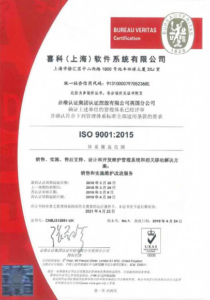
b) the ISO 9001 certificate
Naturally, ask for it only if they claim to be ISO 9001 certified. And, if they don’t have such a certificate, don’t conclude that they are unreliable.
I wrote some tips for checking an ISO 9001 certificate in this article.
- For more information about our background check solution, click here
 4. Drawing a conclusion

If you followed all the steps listed above, hopefully you raised a few red flags and eliminated some shady candidates.
You will have a subjective feeling — do you want to work with them? Do they seem to be a good fit for your needs?
The concept of “fit” is extremely important. Make sure you work with a factory of the right size!
Chapter 3
Engineering Capability
If you want to work with a Chinese manufacturer to develop a new product, you need to evaluate their engineering capability. (If you only buy off-the-shelf products, go directly to chapter 4.)
In addition to the questions a purchaser can ask prior to a visit, there are 5 key attributes you really need to check.
1. CAD Compatibility
One important factor to take into consideration when selecting new supply partners is the compatibility with your computer aided design (CAD) software. If your design files cannot be accessed or read correctly, errors might creep in during production.
2. Design Capability
Another element to look for when selecting a new supply partner is their in-house design capability. Working with a supplier that has solid design skills allows you to work either in conjunction with your own design team, or to utilize the supplier’s design capabilities to carry out design work on your project.
A good example of this would be if you are developing a new electro-mechanical device where you designed the mechanical hardware (e.g. plastic housing) and other non-electronic components, and the electronic design would be handed over to your supplier as they have the skill set that you lack internally. (This could also work the other way around — the idea is that you have a different skill set to your suppliers).
More specific capabilities to look for would typically be:
- Mechanical Engineering – having the ability to design parts such as plastic casings,
metal structural components, functional components like drive shafts and bearing shafts,
as well as having the knowledge of checking and verifying the design for strength by
calculating bending moments and torsional stress limits. It is paramount the mechanical
design team have this analytical capability. - Electrical Engineering – the skill set and knowledge to design for example a drive system where they have to calculate the motor torque and speed of a motor that needs to drive a pulley at a certain speed to lift a specific weight.
- Electronic Engineering – ability to design PCB circuits to a high level of complexity, which should include the use of IC processors, micro BGA components, and other complex surface mount devices.
- Software Engineering – you need to ensure the software engineering team is capable of coding and delivering what you specify from an output functionality point of view.
As you can see, it’s not about the ability to “draw things”. It’s real engineering and problem solving work.

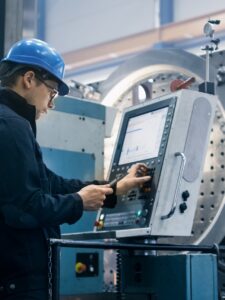 3. R&D Facilities and Capability
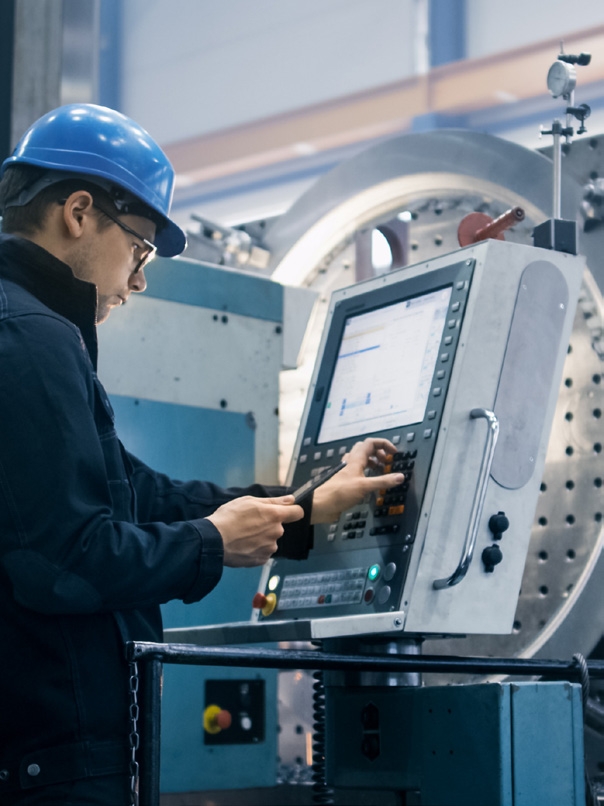
There are occasions where you may need the supplier to work with you on research and development (R&D) aspects of your project.
This could involve utilizing the specific knowledge they have about the industry they focus on. An example of this would be the R&D of a rugged phone case capable of being run over by a car without causing any damage to the phone.
You may well have a great design and carried out all the calculations that show the design works, but having your supplier build progressive samples that are tested and modified within a controlled environment helps move the project forward and closer to production.
If the supplier has dedicated R&D facilities and in-house capability, that can be a huge advantage for you, particularly if you do not have such facilities available.

4. Prototype Capability
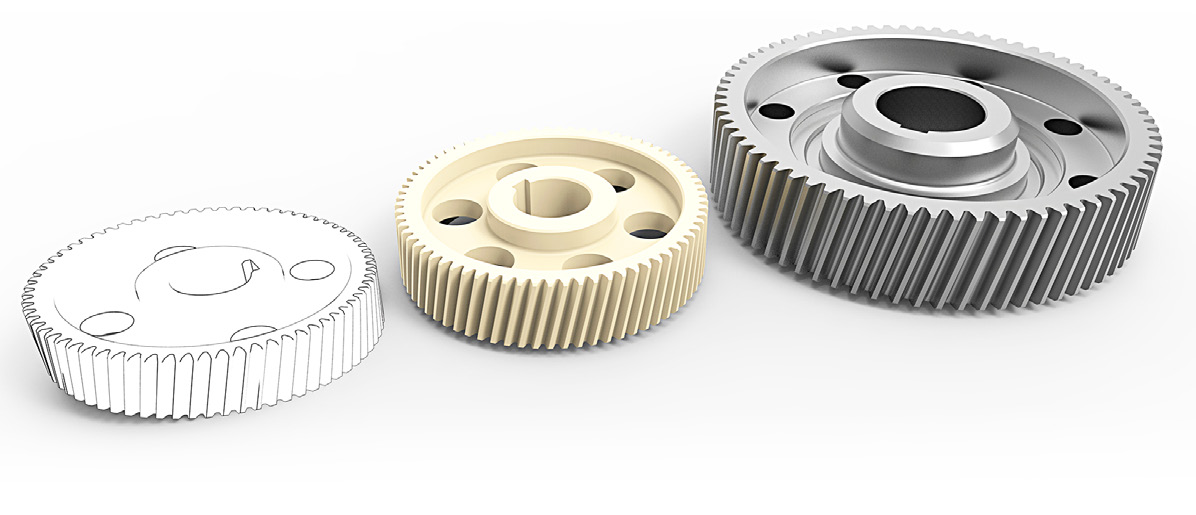
- Once the project has been through the design cycle, it is time to get prototypes made. Working with a manufacturer that has in-house prototyping capability not only speeds up the development process, but more importantly it allows the factory to get a better understanding of your product before it reaches production.
- If you have a supplier that ‘gets’ your project and if they are proactive (this is a rare thing in China but it can happen), they are more likely to make suggestions on how to improve the design from a manufacturing point of view that could well save you money.
- Some of these design changes may include suggestions like combining a number of features into one, thus saving on inventory, or something as simple as changing the draft angle on your plastic part to reduce the number of rejects in production.
 5. Initial Prototype Test Capability

R&D and prototype capabilities are all very good attributes, but having dedicated testing facilities where they can test design iterations in parallel with your own testing is a great feature. This allows you to not only test the different steps in the design, but allows for stress testing and long term testing of your product.
Chapter 4
On-Site Subjective Evaluation
So far you have identified a potential supplier, you vetted their reputation & legitimacy, you asked them questions before a visit… and now is time to pay them a visit in China.
Are they a good fit for your company?
I generally suggest to evaluate the following factors:
- Significance of your orders (if they represent 0.5% of their capacity, why would they care about you?)
- Main focus (do they currently work on high volume and low quality orders — think Walmart — or lower volume and higher quality orders?)
- Seasonality (are they generally very busy at the time of year when you’ll need them to make your orders?)
- Key personnel (if the production manager or the chief engineer leaves, will everything fall apart? Or is there a mature organization in place?)
- Contact person (will you work with a smart and experienced sales person who is not already overworked?)
- Respect of intellectual property (when you look at other importers’ designs in the showroom, is the salesperson eager to sell them all to you?)
Let’s take an example. You have the choice between 2 factories
 Factory A
is very large and well organized. Plenty of procedures, testing equipment, professional management, and a long list of big customers. The orders you are planning to give them are pretty small for them. You are in contact with a junior salesperson.
 Factory B
is much smaller. Their boss is excited by the prospect of getting your business and he promises to follow up closely on your orders. You would represent 50% of their annual output. But they don’t have a structured quality department and their organization is pretty immature.
Are they well managed?
After working closely with a number of Chinese factories, I have noticed some seemingly small signals that one should pay attention to. If you see several of the 6 signs listed below, you can bet the factory is poorly managed and you will run into serious issues:
- The boss keeps sipping tea with friends in his office and never gets out on the production floor
- Managers can’t give responses to precise questions, since they are ignorant about processes
- There is a lot of office space for production supervisors, who do emails rather than training their staff and fixing issues
- Many people, or small departments, have individual offices — it makes communication harder and corruption easier
- There is no effort at visual management (metrics shown on walls, equipment, TV screens etc. and used for managing operations) and few people know what is really going on
- Production operators are paid by the piece, not by the hour (this seems like a great thing to most factory owners, but in fact it is a strong obstacle to improving their organization)
If possible, you should have a conversation with the boss. Ask a few questions and gauge whether he will drive his business into the ground. Here are a few questions you may want to ask:
- He has technical expertise in his key products and processes.
- He has a strategy. He doesn’t go after all opportunities.
- He is looking for profit and stable business, not only for fast growth.
- He is not willing to depend on one big customer. He wants to avoid high risks.

 Is the factory well set up?

A few years ago I wrote a list of things you can observe when visiting a factory, here is an extract from that list:
- Is the production floor clean? Are products in direct contact with the ground?
- Are the workers’ toilets clean?
- Have they invested in new equipment recently?
- Does the owner have an expensive car while production equipment is old and poorly maintained?
- Do the workers wear protective equipment (masks, gloves…) when they perform dangerous operations?
- Are the operators afraid/nervous when you stop and look at them?
- Are the operators mostly young (more into their work, more adaptable) or old?
- Is production organized in isolated islands (a bad thing)? Is there a lot of work-in-process in the workshop (also bad)?
- What operations are they performing? If it is only packing, you are wasting your time (the real action is somewhere else).
- What other customers do they serve in the countries you sell to? Have a look at the labels on the packing line.
For more information about our On-site audits, click here.
Chapter 5
On-Site Factory Quality Audits
Working with a manufacturer that has a strong quality system ensures that ‘very bad surprises in production’ are less likely to come up than with an average factory.
Two reasons why few Chinese factories have a solid quality system
First, many factory owners have a very short-term perspective. Fortunately, this is changing little by little. Factory owners who focus on the long term (keeping good customers happy with good quality) tend to be more successful than those who can only think of their cash position at the end of the day.
Second, few Chinese factory managers have an advanced education degree. They have no concept about system thinking.
What do I mean? They very seldom ensure that the feedback loop (from problem finding to point-of-cause identification all the way to problem fix at the source) is in place. And it means they have no “system” in place.
 ISO 9001 certifications don’t mean much in China

The sad truth is, you can’t trust an ISO 9001 certificate. ISO 9001 in itself is not a bad standard. However, something went horribly wrong in the implementation of the registration/certification system, and no industry professional in China gives any credit to an ISO 9001 certification.
There are several reasons for that:
- Many registrars are very lax, otherwise they wouldn’t have any business (the auditees are their customers).
- Many manufacturers pay consultants for passing the certification without doing any work on their organization’s fundamentals.
- Many third-party auditors are happy to close one eye in exchange for a bribe.
What is the minimum you need your suppliers to do, quali-ty-wise?
The response is, “it depends”.
First you need to understand the differences you might find between two factories. Here are a few examples regarding in-process quality control:
- Maybe it is very rudimentary — for example the owner of a 30-people workshop looks at production and decides by himself if it’s “good enough”.
- Maybe it is a little more advanced — the production line leaders, or a quality control technician, tries to notice defective products and sets them aside, and they tick a few boxes on a form.
- Maybe it is more advanced, with go-no go gauges, successive inspection by production operators, and/or digital sensors.
In each case, a quality system is in place, but the degree of maturity is different by orders of magnitude.
So what should you require as a minimum baseline? I can think of two important factors:
- Can a large manufacturer be interested in your business in the short and in the long term? If the answer is yes, then you can require a solid quality system. If not, you will need to work with smaller facilities that won’t be as well organized.
- Can you follow up on production very closely? If you can, great — you can work with a relatively disorganized workshop and, hopefully, catch all the problems before they become serious. If you can’t, you’ll have to work will well-organized suppliers.
What is checked during a factory quality audit?
If you want to see a long list of points that are generally audited, open this page.
For the purposes of this article, here are the most important points to audit, in my humble opinion:
- Do they check (and sometimes reject) their supplier’s deliveries? (This is a huge hole in most Chinese manufacturers’ systems.)
- Do they have all the testing equipment needed to ensure their products function as expected and are safe?
- Are the components and materials stored adequately?
- Are non-conform materials identified?
- Do production operators know what they are supposed to do? Were they trained? Do they have work instructions that they understand and follow?
- A few critical process steps have a strong impact on product characteristics that you care about. Can the production supervisors or manager point to those steps? Has the factory done something special for them?
- If your product is highly customized, will the factory accept to do a pilot run before the first production?

- For more information about our On-site audits, click here.
Chapter 6
On-Site Social Compliance Audits
So you vetted a potential supplier through background checks and a factory quality audit. Great. You might also have to check their social & environmental policies if you are in one of these cases:
- One of your customers require you to work with responsible manufacturers;
- Your brand might be tarnished if a negative story comes up in the press;
- Your brand promises certain things that are not to be taken for granted (e.g. cruelty-free farms and slaughterhouses).
1. What is usually checked
There are several standards (SA8000, BSCI…) and many retailer proprietary requirements (Walmart, Disney…). Here is an overview of what is checked in most social compliance audits.
Cooperation of factory management and compliance with laws
- Does management cooperate with the auditor?
- Is the minimum wage, the labor contracts, the mandatory benefits, etc. compliant with local law?
Voluntary labor
- Any child labor?
- Any forced labor, excessive discipline, etc.?
Labor hours
Is the local law respected when it comes to the normal number of hours, the maximum number of overtime hours, the pay of those OT hours, the breaks, etc.?
Health and safety
- Any risks of fire? Sufficient equipment to stop a fire?
- Sufficient space for escape routes? Clear evacuation plan?
- Regular fire drills and related training?
- Is adequate personal protection equipment provided, and worn at all time?
- Any other sources of risk for employees?
Note: many other topics can be audited. For example the respect of the environment (is waste
water treated before releasing, and so on).

2. What really matters
Is child labor a big issue in China? Not really.
Does it make sense to fight again and again on the number of overtime hours, if both management and operators want it to be very high? I don’t think so.
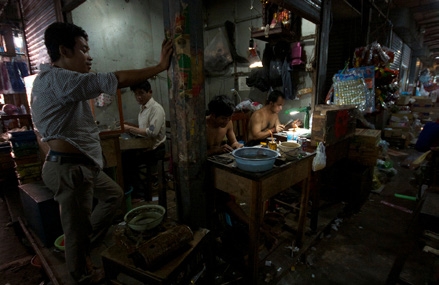
On the other hand, does it matter that fingers and entire hands get chopped off every day somewhere in China? Hell yes! The level of safety awareness and practices in Chinese factories is horrendous.
Does it matter that some rivers are red like blood, or blue like the Samsung logo? Yes I think so.
Unfortunately, this is only my opinion. I wrote more about those issues here.
3. Are social audits helping the workers?
 Probably a little bit, especially in some large factories that work mostly for the US/EU markets.
Have the conditions of workers improved in the Chinese manufacturing sector over the past 2 years? Yes, sure. But mostly because the supply of labor is lower than the number of jobs available, and employers have to attract workers.
Many people have come to the conclusion that the social auditing system of most retailers and brand owners is broken:
- The purchasers award the business based on the lowest price;
- The compliance department needs to ensure there are no excessive risks in the supply chain.
- The factories see no other solution than creating fake records and instructing their staff to lie.
For more information about our On-site audits, click here.
Chapter 7
Factory Process & System Audits
In a previous chapter I described why and how a factory’s quality system can be audited. However, if you want to confirm a factory’s reliability with high certainly, you might have to dig deeper.
The key here is to evaluate the maturity of the systems and processes of the factory. This is a bit advanced for most companies that buy from China, but it is relevant for many technical/industrial purchases.
Here are a few elements that are generally skipped during traditional quality audits.
 Training

- Is there a system to ensure employees have the right competencies for their jobs?
- Is there a plan to develop competencies? Does it make sense?
- Are the goals & objectives cascaded down to each employee so they know what is important in their job? Do they make sense?
- Are performance evaluations based on those goals & objectives?
New Product Introduction (NPI)
- Is there a formal process for NPI?
- Documents: is a process flow developed? A FMEA? A control plan? Are they real working documents or just “for show”?
- Are control methods (including equipment and sampling size) defined?
- Is there a verification that the production equipment is ready to produce the new product (e.g. first sample sign off)?
Management Systems
- Do the production manager’s targets include “number/proportion of good quality pieces”, or just “number of pieces”?
- Is someone clearly responsible for quality in each workshop?
- Is someone clearly responsible for timing in each workshop?
- Are quality and productivity metrics visible to every one? Can local managers see the right information early enough to take appropriate measures?
Continuous Improvement (CI)
- Is a problem solving methodology defined? Are employees trained in that methodology in an adequate manner?
- Does the whole CI system seem effective (the normal way of doing business), or is it “for show”?
- Are root causes addressed, with a focus on systems and processes?
- Are countermeasures appropriate (e.g. not “retrain operator”) and really validated over time?
- Are the internal defect rate and the customer defect rate tracked, and are they the basis of improvement initiatives?
Equipment Maintenance
- A plan guides the maintenance of all tools, production equipment, jigs and fixtures, and test equipment.
- Predictive models guide the re-ordering and the replacement of certain tools.
- Production operators are trained to take care of their equipment.
Process Controls and Mistake Proofing
- Human operations are mistake-proofed as appropriate, with a particular focus on CTQ characteristics.
- Where mistake proofing has been impossible so far, operators are given checklists.
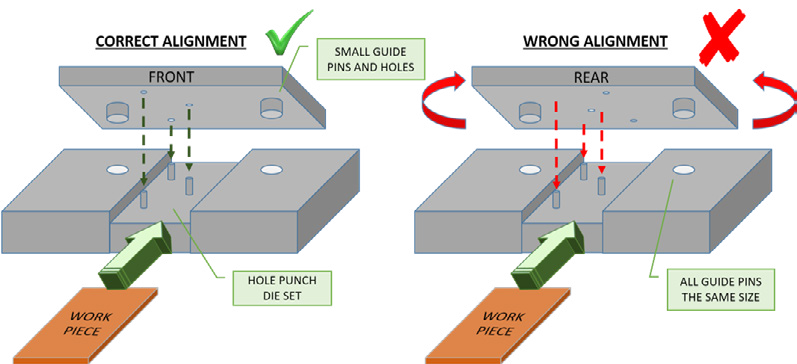
- Process parameters of machinery are documented and a procedure needs to be followed if they are to be modified.
- Process capability (e.g. Cp or Cpk index) is monitored and is adequate (e.g. at least 1.33 for CTQ characteristics).
- Measurement systems are calibrated and validated statistically (e.g. gages R&R).
Process-Specific Checkpoints
In addition to the generic checkpoints that apply to virtually every manufacturing facility, an auditor with the right technical experience can check what really matters to the main processes. For example, for rubber molding, here are some of the our process audit checkpoints:
- Technical capability of making the intended product
- Setup procedures
- Process parameters
- Cycling parameters
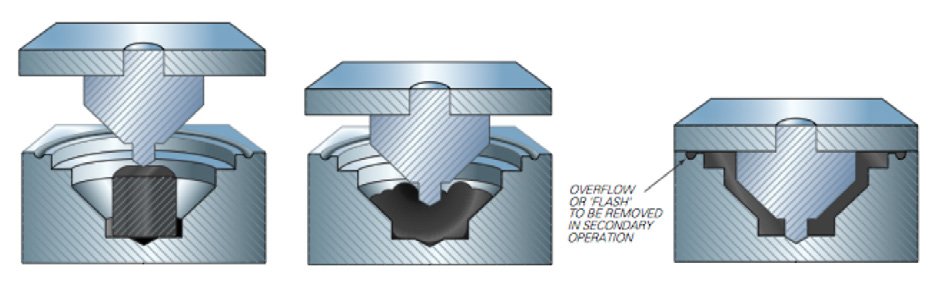
- Compression mold process parameters
- Transfer mold process parameters
- Silicone rubber extrusion
- Liquid injection molded silicone (LIM)
- Material control
- Rubber delivery
- Material processing
This list is far from exhaustive and you probably need to customize it to your needs. If on-time delivery is quite important, for example, you need to look into supply chain systems.
Compression Molding Process
For more information about our On-site audits, click here.
Chapter 8
Factory Testing Capabilities
 If you have conducted inspections at your suppliers’ facilities in China, you have probably found that much of the testing equipment necessary to check your product’s quality is not available on site.
The question, of course, is ‘how can they be sure production is good, if they are unable to check it?’
The reality is simple. A factory that is missing the necessary testing facilities does NOT have the capability of producing consistent quality products.
The testing facilities will vary for different product types (e.g. castings vs printed circuit boards). Taking this into consideration, you need to understand the manufacturing process and what testing you require your product to go through.
Here are a few examples of testing facilities that would be appropriate for various products.
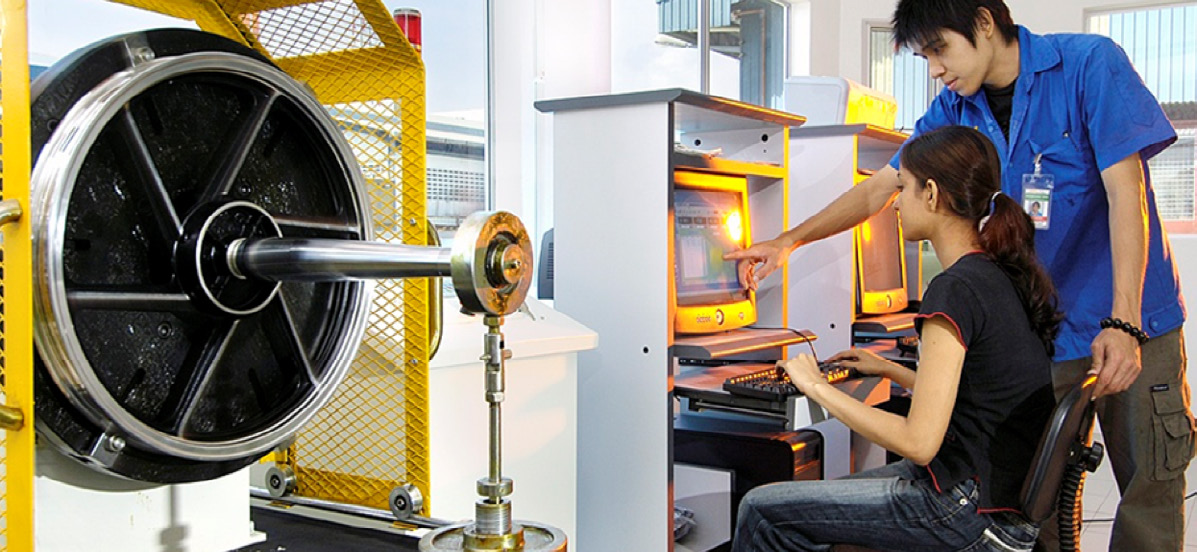
Electrical Product Testing Facilities
Multiple tests must be carried out due to safety regulations and are mandatory, and other tests are carried out to identify issues and failure points.
Here are just a few of the tests and the equipment used that factories should have within their facilities.
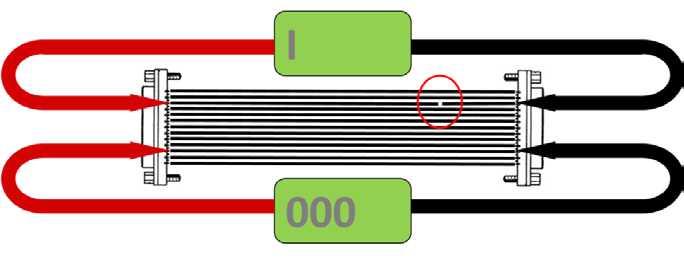
Continuity Testing
A GOOD connection between connectors with NO broken wire is shown in this example (see bottom side — reading is 0 or very close to 0).
A BROKEN wire between connectors is also shown in this example (see top side — reading is 1).
 Testing Crimp Connection Strength
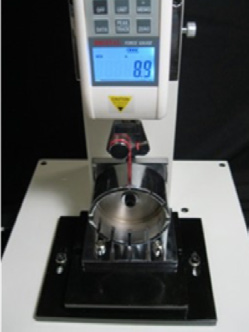
The mechanical strength and electrical integrity of an electrical terminal, terminator, or connector are related, and depend on the quality of bond created by a crimp joint.
In the case of crimp joints, the crimping tool itself can be calibrated and its effectiveness tested with a cable pull-out/ pull-off test.
Hi-Pot Test
The Hi-pot test is probably the best known, the most often performed and most important production line safety test, and must be performed on every consumer and industrial appliance. The test also uncovers defects in the insulating material or physical space between conductors.
The Hi-pot test is a non-destructive test that determines the adequacy of electrical insulation for the normally occurring over voltage transient. This is a high-voltage test that is applied to all devices for a specific time in order to ensure that the insulation is not marginal.
 Checking Earth Bond (PAT Testing)
This test is performed by measuring the resistance between the third pin (ground) and outside metal body of the product under test. This test is essential so that the product does not cause an electric shock resulting from insulation failure.
The best method of testing is by using dedicated equipment which is commonly known as Portable Appliance Testing equipment (or PAT tester for short).
Additional test equipment
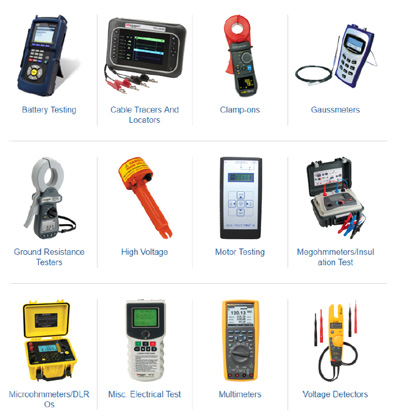 The list could go on and on. A few more examples would be:
- A fabric cutter and a digital scale
- A digital thermometer probe or thermocouples for checking temperature
- A tachometer to check motor speeds
- A sound meter to check noise levels of electrical products
- A voltage meter
And a few extra examples I found on the internet (on the right).
Chapter 9
In-depth Due Diligence
This advice is applicable if you are about to select one Chinese supplier, and you know you will be tied to them for many years to come.
Here are a couple of examples:
- A company is about to work with a manufacturer on a complex, custom-developed, product. If things go well, production will start in 4-6 months. Finding out many issues later will mean very serious delays.
- An end customer has to approve the facility or it has to be certified to a certain standard that is difficult to achieve. Approving a new factory later on is expensive and time-consuming.
Let’s go through the main points you will want to check before choosing your manufacturing partner.

1. Financial health, capital, debt, partners
Here you want to go deeper than in chapter 1 (background check).
- Who is the owner? Are there several partners? Does the “boss” you were introduced to have as much power as he seems?
- Is the company I am in contact with a manufacturer, or a trading company?
- Have they been losing money for a long time? Maybe the boss will run away soon?
- Is there a chance they accumulated debt with their suppliers over time (even if that doesn’t show up on the books)? In that case, how will they put pressure on their suppliers to improve quality and on-time delivery?
- If it’s a recent company, was all their declared capital transferred? Or is there a risk that they close the company because they can’t contribute all the capital?
Getting a Chinese business’ financials has gotten much harder in recent years. Specialized firms can still get their hands on this information without the target company being aware of it, but only in certain cities.
2. Respect of regulations
Do they have any potentially polluting process such as paint, plating, anodizing, e-coating, etc.? Do they have the right licenses (if applicable), and is there a risk they get shut down soon by the government?
Have they paid the staff social insurance? Have they declared a profit, or done a good part of their business ‘under the table’?
Again, not easy to check without the manufacturer being aware of it. But you can ask for the tax return and the license documents (if applicable). If they don’t show it to you, are they really going to be your partner?
3. Other important indicators
The supplier gave you a lot of information in chapter 2 (questions before the first visit). Go on site and check it!
Is there something that isn’t regularly misrepresented in China? I am not sure:
- A piece of land that is supposed to be owned by the supplier might be reserved for residential use, or might be owned by another company, or both.
- A government inspector who shows the thumbs up might be an actor hired for the day.
Something physical is harder to fake:
- If you come three times and you see that the packing department handles many more pieces than final assembly, you can conclude there is a lot of subcontracting. Will your productions be subcontracted too?
- If the star engineer whom you really like doesn’t seem to have a physical desk in the office, and if he doesn’t know the name of the assistants in his department, he is probably not a regular employee. Will he be around when they have to work on your project?
For more information about our supplier background check solutions, click here.
Chapter 10
Pricing, Negotiation, Contracts
By now we covered pretty much all sorts of due diligence a paranoid importer might go through! And yet it’s not over.
Organized RFQ (Request For Quotation)
One thing you want to check is whether the supplier you end up working with is over-charging you, and by how much.
That’s why most importers compare the pricing of several potential suppliers. If more than 5 suppliers give you a quotation, you start to have an idea of the average market price. If you get 20 quotations that were prepared seriously, you have a pretty good idea.
The problem with that “get many quotations” approach is, the best potential suppliers might not respond to you. They are busy and, unless you spend time communicating with them, you are not sending the right signals. They simply don’t have sufficient time to answer all enquiries.
What can you learn about a potential supplier here?
 If you are starting to develop a complex new product with a Chinese company and they already try to rip you off on the first order, imagine what they will do once you depend on them 100% for that production!
You also want to make sure their quotations include sufficient detail. For example, for a plastic injection molded product, do they specify what steel is used in the mold, what the hardness is, and how many shots it will survive? Do they write the weight and material of the molded parts, and the number of cavities?
If they are unspecific, you need to know whether it is due to a lack of time, a lack of involvement/motivation, or if they want to avoid committing to a clear standard.
(And, in case you feel confident in your sales numbers, you can work with a lawyer to negotiate an OEM agreement that spells our order quantities and, in exchange, request the price to follow a predictable formula.)
How do they respond to pressure on price?
If you mention your target price is 20% lower than their quotation, do they plead for an effort on your side and then accept a lower price? It might indicate that they are solely focused on getting your business, and they will find ways to ‘cheapen’ your product later. That’s what you really want to avoid!
Or do they suggest to change a material, or skip a process? This is a much better sign. They understand their cost structure (which is not always the case in China) and they are relatively open.
I could go on and list other behavior-related risks. We compiled a good list here before.
When to ask for precise quotations?
It depends on several factors. Here are a few examples.
- If it’s off-the-shelf Christmas balls, ask for pricing right away. There is no downside to it, and I guess pricing is the most important consideration!
- If it’s a product design you have taken 15 months to perfect, you need to qualify the supplier first in order to avoid sending your blueprints to too many potential competitors.
- If you work in a highly regulated industry (say, medical devices), you need to first qualify the factory because it makes no sense to waste time communicating with potential suppliers that would not qualify.
- If you know you will be “married” to a factory for years but the product to make is not highly confidential, you can start by asking for quotations based on a similar product. You screen most suppliers out, then you can disclose more details and get finer quotations.
As this last example suggests, asking for revised quotations in several rounds is a good opportunity to spot unscrupulous suppliers. This will happen naturally as you add details to your enquiry — for example a nice packaging.
Requesting the supplier to sign enforceable contracts
How do they react when you ask them to sign a contract that is enforceable in China and might come back to bite them? Do they read it carefully and ask intelligent questions? Do they sign it and send it back right away (presumably without reading it)? Do they keep it aside and wait until you are engaged too deep in the relationship?
(Don’t work with your usual commercial lawyer. This is something that requires a lawyer specializing in China business law. Otherwise the contract may be poorly written and may end up not being enforceable.)
Similarly, how do they react when you announce that you will have them audited, and then their production will be inspected before every shipment? Do they disappear? Do they push back (and why)?
Overall, all these business-related contact points will teach you a lot about a potential supplier. There is one caveat, though. On your side, do what you can to look like a serious and experienced buyer. If they detect that you are very green, or that your business is relatively small, they will give much less time to your enquiry and that might look like an intent to bamboozle you.
